

MHHS 2026
An update on Market-wide Half-Hourly Settlement (MHHS): what it means for your business now
Publish date: 29/06/2026
Read time: 5 minutes
Join Ross Easton, MHHS Programme Lead as he shares an update on Market-wide Half-Hourly Settlement (MHHS), what’s new and what this means for you and your business.
Since we first shared an overview of Market-wide Half-Hourly Settlement (MHHS), the programme has continued to progress and reach key milestones across the industry. If you haven’t read our previous blog, you can find a full overview of MHHS and why it’s being introduced.
At TotalEnergies Gas & Power, we’ve now reached an important next milestone in that journey, successfully progressing through MHHS qualification.
This is a significant achievement for us as a supplier, confirming that we’re ready to operate within the new market arrangements as the programme moves into its next phase. It also puts us in a strong position to support our customers and partners as industry-wide migration continues.
In this update, I want to build on what we covered previously, recapping what MHHS is, sharing what’s changed, and outlining what this means for you as we move closer to full implementation.
A quick reminder: what is MHHS?
As we outlined in our previous blog, Market-wide Half-Hourly Settlement (MHHS) is an industry-wide reform that will change how electricity is measured and billed across Great Britain. In simple terms, it means that electricity usage will be measured and settled every 30 minutes using actual data, rather than relying on estimates or standard usage profiles. This allows suppliers to better match the electricity we buy with what you actually use, helping create a more accurate and efficient energy system. For your business, that means greater transparency over your energy use and more confidence that your bills reflect how and when you consume energy. It’s also an important step towards a smarter, more flexible grid, supporting the UK’s transition to Net Zero.
Why this matters for your business
While much of MHHS will happen behind the scenes, the benefits for customers are very real.
Greater accuracy and transparency: Your bills will better reflect your actual usage, rather than relying on estimates.
Better insight and control: Half-hourly data gives you clearer visibility of when and how your business uses energy.
Access to more flexible products: MHHS will enable new tariffs and services, including those that reward flexibility.
Supporting sustainability goals: The reform supports better integration of renewable energy and more efficient system balancing.
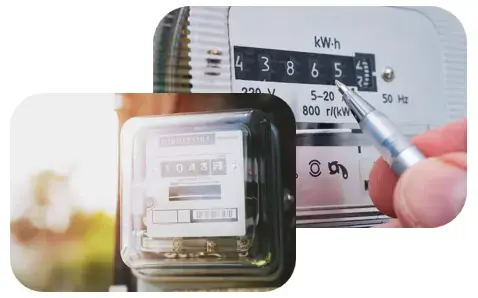
Metering under MHHS: will your meter need to change?
One of the key enablers of MHHS is the ability to capture and share half-hourly electricity data.
If your business already has a smart or advanced (AMR) meter, you’re likely well positioned for the transition, as these meters are typically capable of recording consumption every 30 minutes.
However, there are some cases where meter upgrades or configuration changes may be needed to support MHHS. This could include:
- Upgrading your traditional meter to a half-hourly capable meter if you don’t already have one
- Completing a Change of Measurement Class (CoMC) where meters need reconfiguring to meet MHHS eligibility requirements
- Ensuring meters are set up to share data across the new market systems
This forms part of a wider industry programme, and we’ll proactively contact you if any changes are required for your site. Our aim is to make this as straightforward as possible, with minimal disruption to your business.
For customers who don’t currently have a smart or AMR meter, installing one will be important to fully operate in an MHHS environment and access its benefits. If you’re considering an upgrade, you can find more information on our Business Smart & AMR Meters page.
From my perspective, a big part of MHHS is about getting the foundations right. Once accurate half-hourly data is in place, it opens up real opportunities for customers to better understand and manage their energy.
What does MHHS mean for your meter reads and billing?
MHHS changes how electricity usage is recorded and reflected on your bill. Instead of relying on estimates or standard usage profiles, billing will increasingly be based on actual half-hourly consumption data, captured every 30 minutes, and used across the market.
What's changing on my bill?
- Very little! If you're billed using meter reads today, this will continue. We'll still collect remote readings, and you can still provide reads. If you're already billed using half-hourly (HH) consumption, this will remain the same
- If your meter is upgraded in future (via a physical exchange), you may move to being billed using HH consumption data
Manual meter readings will become less relevant over time as smart and advanced meters automatically capture and share data. Behind the scenes, suppliers (including us) are also updating billing and settlement systems to support this more data-led approach.
Our progress: MHHS qualification achieved
Reaching MHHS qualification is a significant step for us. It confirms that our systems, data processes, and operations meet the required industry standards to operate under the new framework, an important milestone as the market moves closer to full implementation. Behind the scenes, this has involved extensive preparation, from system upgrades to data readiness and operational changes.
For our customers and partners, this milestone provides reassurance that we’re ready, and well-positioned to support you through the transition.
Key MHHS milestones and industry timeline
MHHS is being rolled out across the industry in phases. Here are the key dates to be aware of:
- September 2025: Central systems go live and initial market changes begin
- October 2025: Migration of electricity supplies (MPANs) to MHHS arrangements begins
- 2025–2026: Suppliers progress through qualification and readiness activities (we’ve successfully achieved qualification as part of our allocated migration wave)
- 2026 onwards: Customer migration continues in phases across the market, with TotalEnergies Gas & Power entering migration as part of wave 2 of the programme
- October 2026 (target): Key industry deadline for suppliers to be fully qualified for the new arrangements
- By May–July 2027: Full market implementation, with all electricity supplies settled using half-hourly data
This phased approach is designed to ensure a stable transition across millions of electricity supply points.

What should you do now?
No immediate action is required, that said, it’s a good time to:
- Stay informed as the rollout progresses
- Understand your current metering setup
- Start considering how improved data could support your energy strategy
We’ll continue to keep you updated and help you make the most of the opportunities MHHS brings.
Final thoughts
MHHS is one of the most significant changes our industry has seen in recent years. While much of it sits behind the scenes, I believe it represents a genuinely positive step forward, for the energy system, and for our customers and partners.
For me, the focus is simple, it’s been making sure we’re ready and making the transition as straightforward as possible for the businesses we support. We’ve invested a lot of time and effort to reach this point, and I’m confident we’re well positioned for what comes next.
We’ll continue to keep you informed as the programme progresses and ensure you’re supported at every stage.
For more information on MHHS, we've a dedicated webpage: Market-Wide Half-Hourly Settlement.
If you’ve any questions about MHHS or what it means for your business, our team is here to help.